Author
How Engines Work
The editorial team behind howengineswork.com.
19 articles

Mercedes Won 140 of 252 Hybrid-Era F1 Races
Best F1 engine hybrid era: Mercedes power unit wins dominate. See every supplier's race wins ranked with exact F1 power unit data.

Motor Sizing: The Two Numbers That Catch People Out
← Blog Electric Machines · Go deeper 6 min read Motor-driven systems account for more than 70% of industrial electricity use in the United States, whi
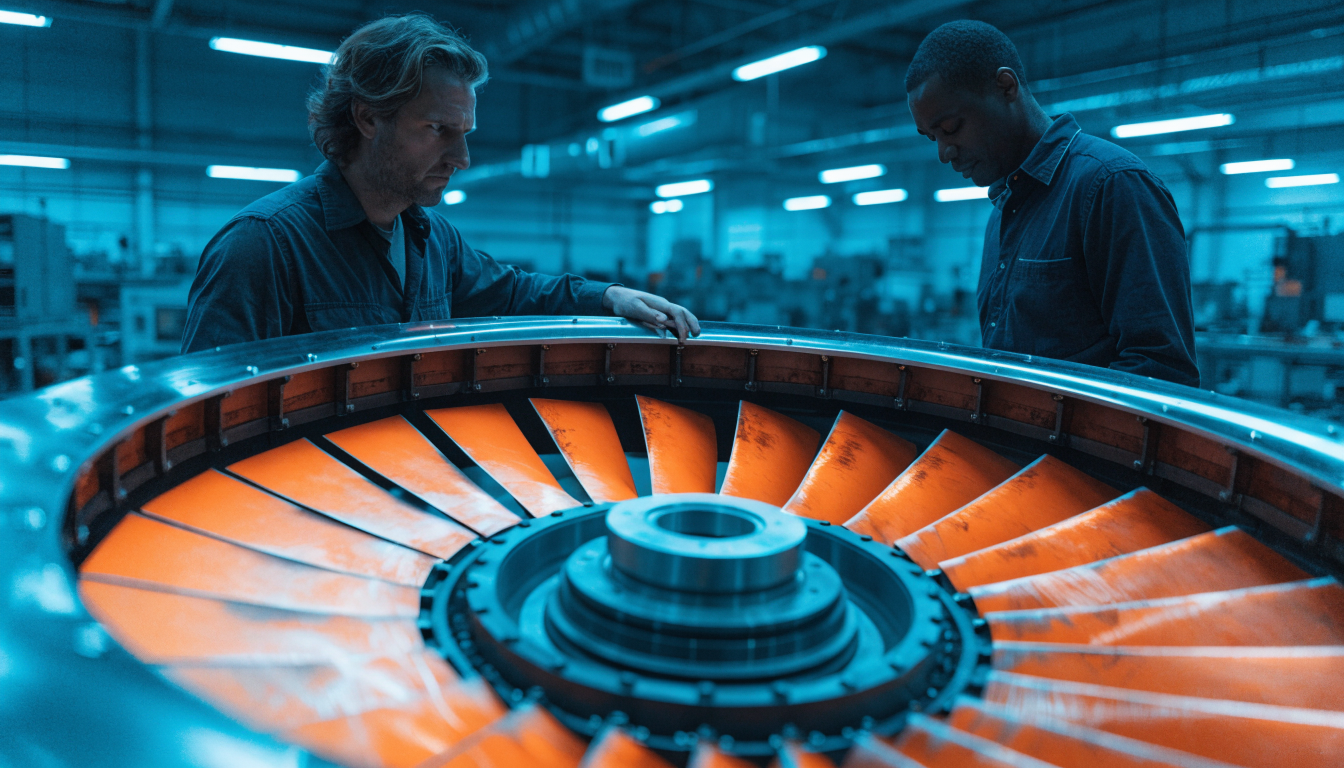
Thermal Barrier Coatings: Keeping the Heat in the Gas
← Blog How an Engine Works · Go deeper 6 min read An engine's cooling system is usually described as protection: it stops the metal melting. That is t
Why Engine Timing Is Measured in Degrees, Not Seconds
← Blog How an Engine Works · Go deeper 5 min read Ask when an engine's inlet valve opens and the answer comes back in degrees: about fifteen before to

Open-Fan Engines: Why a Bigger Fan Burns Less Fuel
← Blog Jet Propulsion · Go deeper 6 min read CFM's RISE demonstrator has no cowling around its fan. The blades turn in the open air, which looks like

Active Suspension: the Car So Good It Was Banned
← Blog How a Car Works · Go deeper 5 min read By the 1990s a Formula 1 car's downforce depended exquisitely on its exact height and angle over th

Brushless Motors: Why Kt and Ke Are the Same Number
← Blog Electric Machines · Go deeper 6 min read Open a brushless motor datasheet and two numbers sit near the top: the torque constant, in newton-metr
How Mercedes Won 118 of 252 Hybrid-Era Races
← Blog Motorsport · Go deeper 6 min read Between 2014 and 2025 Formula 1 ran 252 grands prix, and Mercedes won 118 of them. The tally is not the inter

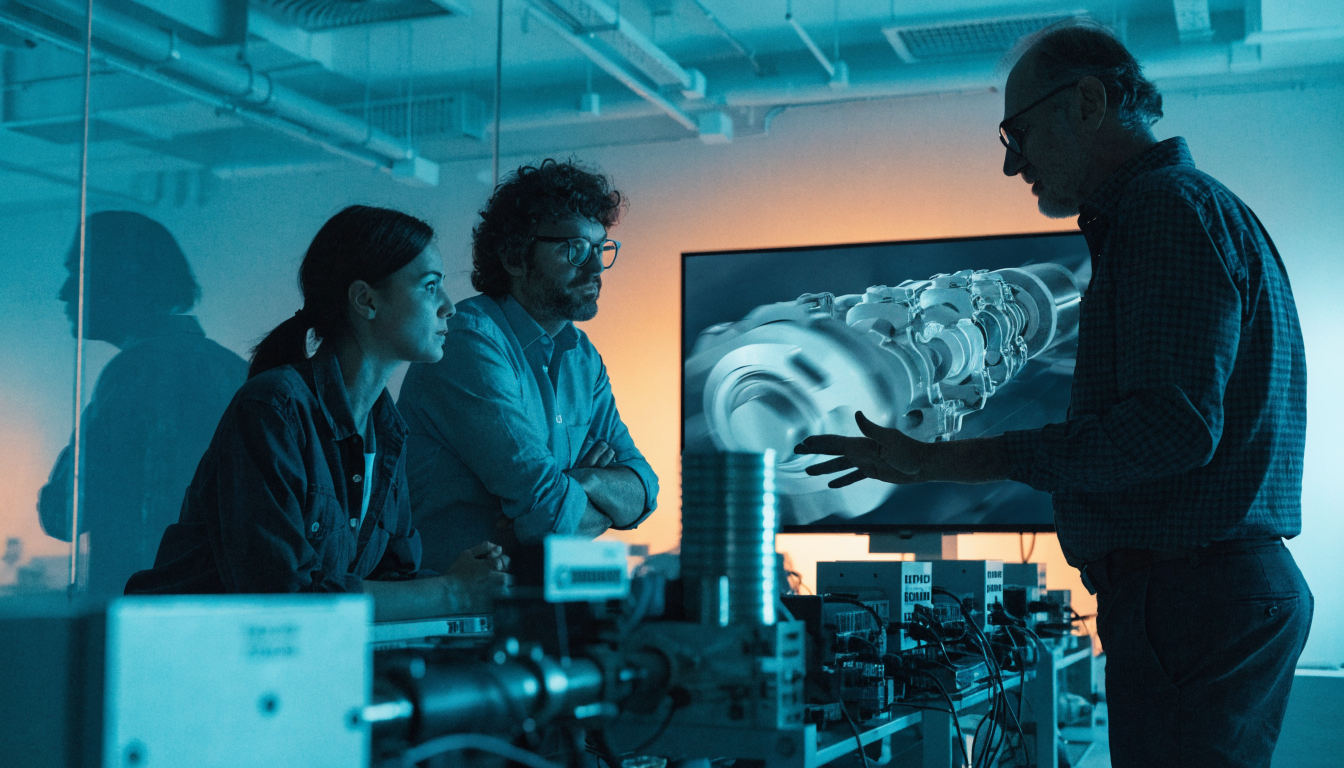
What MIT Learned Building a Jet Engine With AI in Four Weeks
← Blog Engineering Practice · Go deeper 5 min read In July 2026 MIT set thirty-one undergraduates a deliberately unreasonable task: four weeks to desi
How Mercedes Won 118 of 252 Hybrid-Era Races
Mercedes won 118 of the 252 grands prix run under the hybrid regulations. Most of that margin was decided before the first race, by an argument about where to put a turbocharger.
Active Suspension: the Car So Good It Was Banned
How a Car Works · Go deeper 5 min read By the 1990s a Formula 1 car's downforce depended exquisitely on its exact height and angle over the road

Plug-in Hybrids: Two Cars Sharing One Body Shell
A plug-in hybrid's window sticker carries two fuel economy figures because charge-depleting and charge-sustaining are genuinely different vehicles. Which one you own depends on you.

Why Two Engineering Calculators Give Different Answers
Some constants are measured and some are defined by international agreement. Rounding the second kind introduces an error that was never there — and it multiplies.
Open-Fan Engines: Why a Bigger Fan Burns Less Fuel
CFM's RISE demonstrator has no cowling around its fan. Removing it targets over 20% lower fuel burn, and the reason is a piece of physics that never changed.
Brushless Motors: Why Kt and Ke Are the Same Number
A brushless motor datasheet lists its torque constant and its back-EMF constant separately. In SI units they are identical, and conservation of energy is the reason.
What MIT Learned Building a Jet Engine With AI in Four Weeks
MIT gave 31 undergraduates four weeks to design, build and run a working jet engine using AI as their main engineering partner. What compressed, and what did not.
Why Engine Timing Is Measured in Degrees, Not Seconds
Valve and ignition timing are quoted in crank degrees because that is the only unit that stays true when the engine changes speed — and it is why valve overlap exists.
Motor Sizing: The Two Numbers That Catch People Out
Steady-state torque is the easiest part of a motor specification to get right. Inertia ratio and duty cycle are where the expensive mistakes actually live.
Thermal Barrier Coatings: Keeping the Heat in the Gas
Every joule the radiator carries away was bought with fuel and never became torque. Thermal barrier coatings exist so there is less of it to carry away.